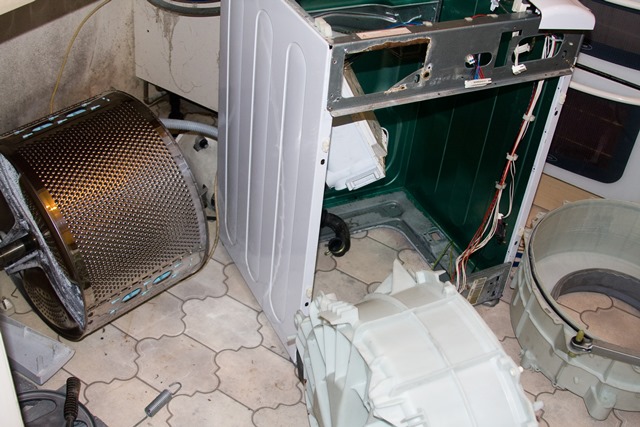
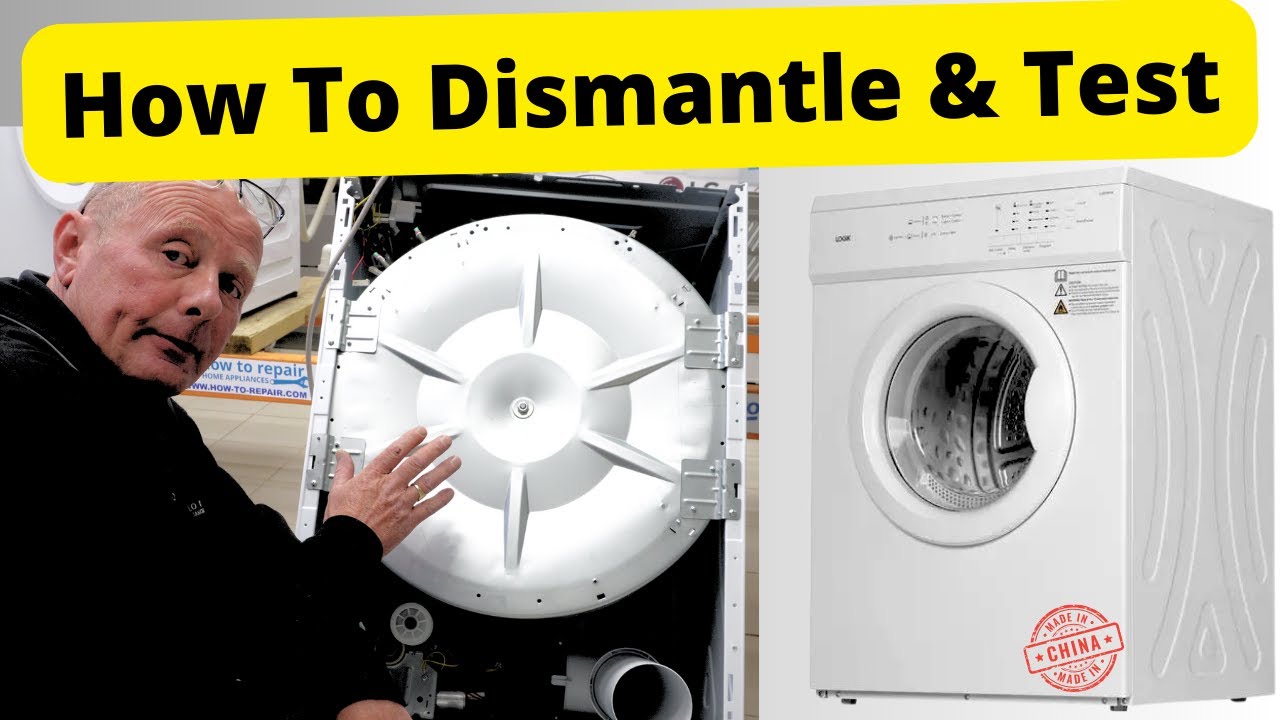

This video will show you a step by step procedure for removal of the drum. It is 1 of 4 videos in the series.
To order your washing machine drum bearings you will need your full model number. (This is normally around the washing machine door frame on a sticker)
If You Can´t Find It, Contact Us With Your Model Number and We Will do the Work for You!
The Story Behind Changing Washing Machine Drum Bearings
Of all repairs on washing machine this can be one of the most difficult to successfully complete as this requires a complete strip down of the machine. To be able to understand the process, you should watch the full video tutorials on this subject. You can start watching the video series from the first video above.
The first thing you have to understand about a bearing change on any washing machine is that if you’re not confident in your ability to totally strip the machine and re-build it safely, then call in a friend who has knowledge of mechanical things like cars, or you will have to call in a professional repair engineer since this is a job that will take up most of your day.
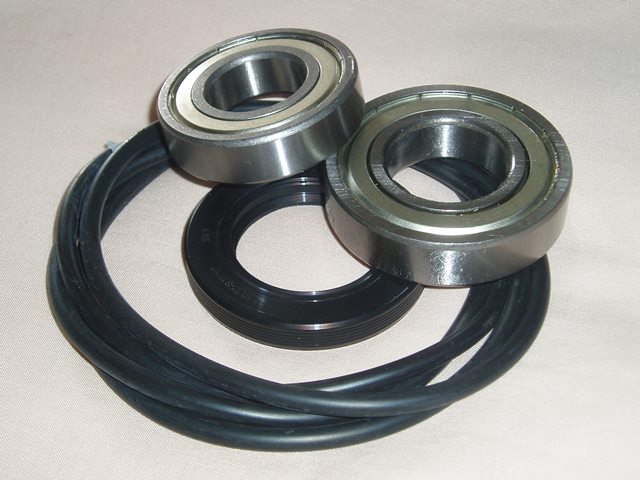
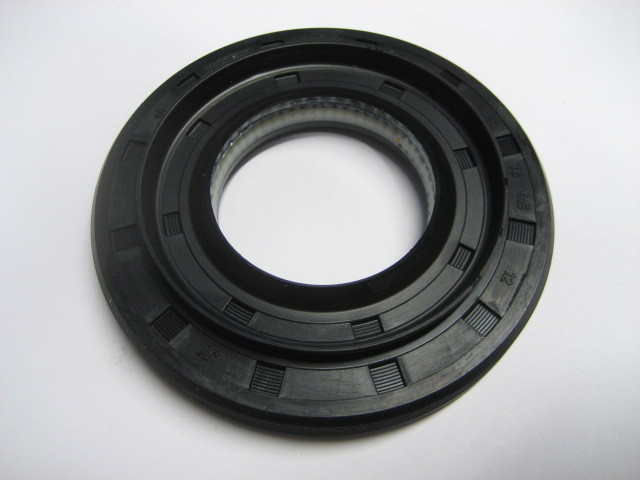
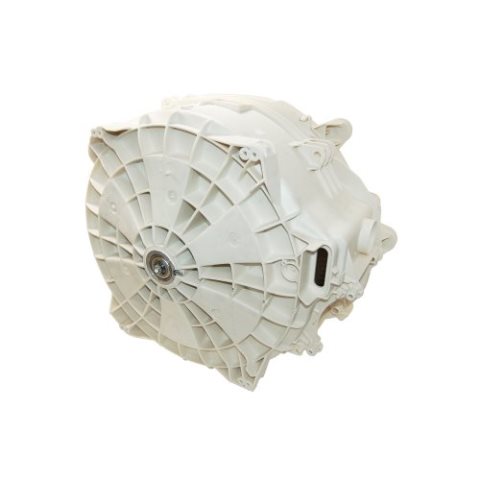
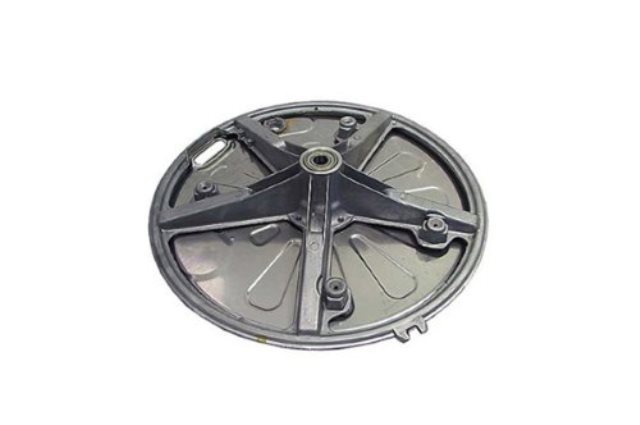
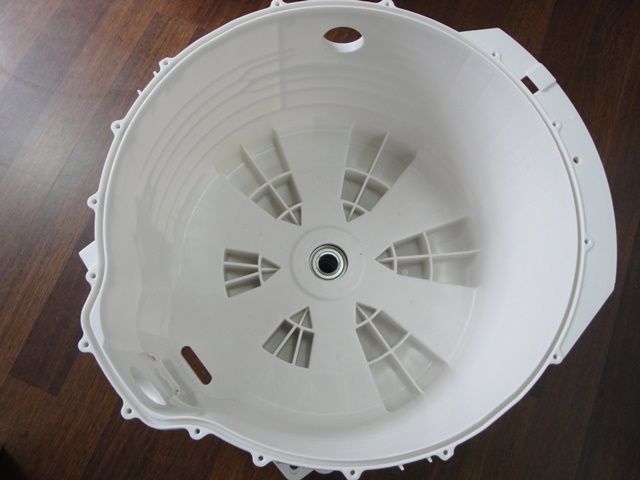
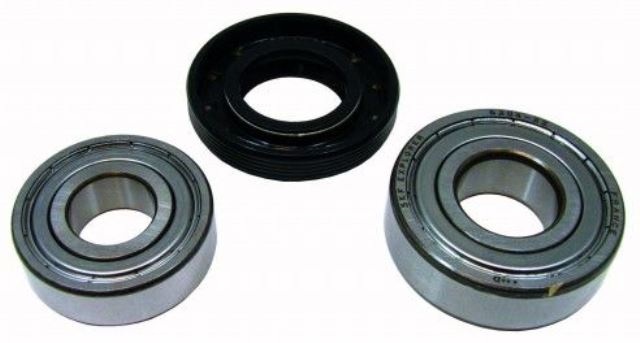
In a washing machine, there are two bearings and a seal to stop water from leaking through the bearings. These images below show a typical bearing set for a washing machine or washer-dryer. There are two bearings and a water seal.
Usually, the water seal on the front bearing, which often relies on a brass bush on the drum shaft for sealing, will fail, allowing water to enter the bearing. That bearing now slowly rusts over time and, eventually will collapse due to the oil or grease being washed out and will start to get noisy on spin.
To make it even worse, some manufacturers, notably Hotpoint, Ariston, Indesit, Electrolux, Zanussi, AEG, and Tricity Bendix have introduced sealed tanks where bearings cannot be replaced, which means you have to replace the entire inner working of the machine. The reason, they say, is to cut down on production costs. Not all models on the above machine have sealed tanks, so check with the part supplier first before starting the job.
Safety First,
When accessing the washing machine, make sure you disconnect from the electric supply!
Also, ensure that you have ALL the spare parts that you are likely to need to hand, as the last thing you want is to stop halfway through the job. You also do not want to miss a part that you should replace while at it, like a tub seal, for example, and this is where a little expert guidance can come in handy.
Most common bearings, drums, and drum seals are available on our supplier’s website. Please use your full model number, which is written on the identification plate, to get the spare part you need.
The first thing you have to work out is how to get access to the washing machine bearings and seal.
Depending on the type of machine, this can be relatively easy or just an absolute pain.
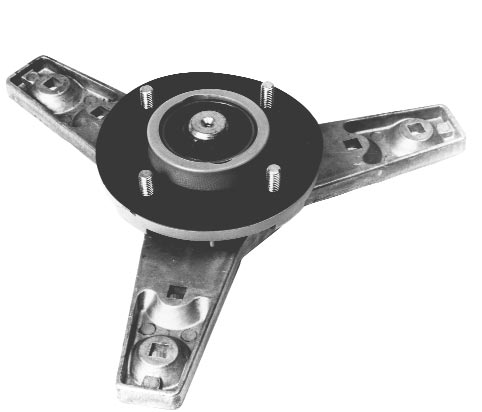
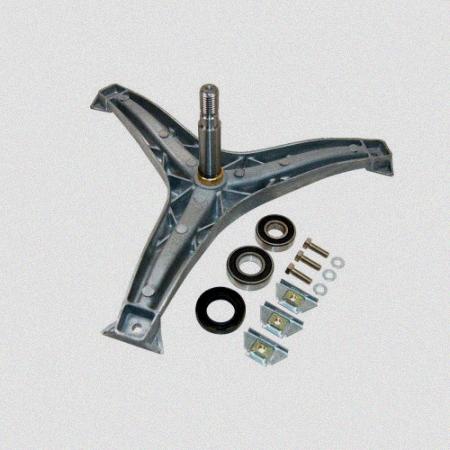
Older machines that were well built were pretty straightforward, assuming that there was no damage to the drum shaft, as they had a spider and shaft on the back, which you simply removed a few bolts to draw off, changed the bearings, and put it back on. I know that sounds easy, but trust us, for some, it isn’t just as simple as it sounds.
Some others, like Servis and Antonio Merloni based machines, have a bearing plate that is released by a clamp band at the back, and the whole back of the tub comes off, heater included. This is probably one of the easiest to do and means that you have full access to the insides of the outer tank, so you can check for other problems. The seal really has to be replaced as well.
On Zanussi, AEG, Tricity Bendix, Bosch, Siemens, John Lewis, and Electrolux machines (they’re all pretty much the same regardless of what the marketing literature tells you) the cabinet splits and the back has to come off or front to extract the entire tub. To get the tank out, you have to disconnect everything from it, I do mean everything, to extract the whole lot and then strip it outside the shell.
On some makes like Candy or Gorenje washing machines as well as others, things get even more difficult when changing the bearings, as not only does the whole tub have to come out, but the only way that it will come out is through the top. This is a soul destroying job.
This is probably one of the most important tips for when you attempt to change bearings, which is replacing the seals. Not only the bearing water seal has to be replaced, but it should be replaced with the new tub seal as well. The reason is pretty simple, if you put the washing machine back together and find you have a leak, then you will have to strip it down again, and for the sake of a few pounds, euros, or dollars, it’s not worth it!!
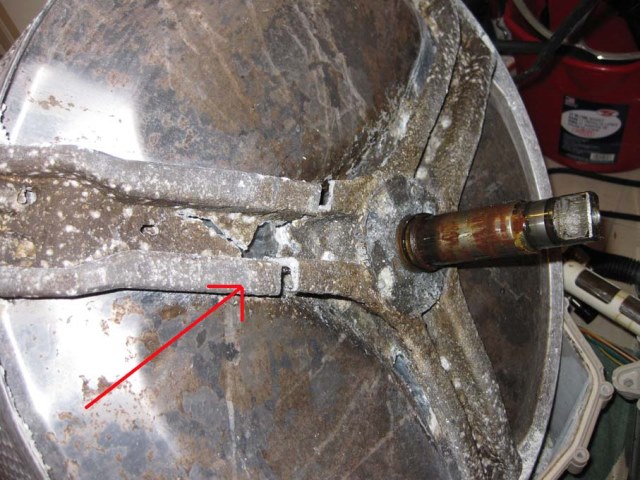
The inner drum of the washing machine is a stainless steel part in which you put the clothes. On the back of that, there is a spider and a shaft. On that shaft, which slides into the bearings, there is normally a brass bush, which you can see in the video. On most machines, you must inspect the shaft very carefully, as they can get worn and will simply tear up the new water seal and again within months of being replaced, you will have the same problem. So it’s worth replacing the spider if it’s worn.
Tools Required To Replace Washing Machine Bearings
Quite often, you need specialist tools to replace bearings; some even require specially manufactured bearing drawers to get them in and out. And, while these may not be absolutely essential, they sure can make life a lot easier. But in the video, I will try and show you some normal tools that you can get away with using without buying the specialist tools.
When tapping bearings in, the greatest care needs to be taken to ensure that they will last any length of time. This applies even more so to the front bearing water seal, as virtually any damage to that part alone will be the cause of another failure, without doubt.
With many modern machines, you will need a good selection of screwdrivers, spanners, and quite often Torx bits. In other words, make sure that you are well armed with tools for the job.
New Washing Machines & Washer Dryers Where You Can’t Replace Bearings
In recent years, we’ve seen an increase in what is known as the sealed tank or drum, where the outer tank is sealed completely. Usually it is welded around the middle of the outer tank, and in this case, the drum bearings of the washing machine or washer dryer cannot be accessed to replace them.
I frankly find this disgusting and not good for consumers’s pockets. It means that the machine is only designed to last a thousand cycles or so and then effectively scrape after a couple of years due to cost.
There Are 4 Videos Below To Learn How to Replace Washing Machine Bearings
The first video above is on how to remove a washing machine drum tub, and is part of a series of 4 videos showing you the correct way to change the bearing in a washing machine. It shows how to change your drum and drum bearings, specifically for WF and WM series Hotpoint washing machines, as well as Ariston, Creda, Indesit, and others.
This video tutorial is the second part and it provides a step-by-step guide using common household tools. Key steps include:
- Preparing the Drum: Turn the drum onto its front and lock it to prevent turning. Use a 13mm spanner or socket to remove the nut, which may be tight due to Loctite. Then, lift off the pulley.
- Removing the Drum Shaft: Tap the drum shaft with a piece of wood to release it from the bearings. Remove the screws holding the tub together and separate the two parts of the drum.
- Removing Bearings: Knock out the bearings evenly to avoid damaging the casing. Ensure the drum is supported on pieces of wood.
- Installing New Bearings: Clean the bearing housing and tap the new bearing in place using wood and a chisel, only hitting the outer race of the bearing.
- Reassembling the Drum: Insert the new seal, making sure joints are at the top. Use silicone sealant to prevent leaks. Refit the tub and drum together, aligning screws and tightening evenly.
This one is the third video on changing the bearings in a washing machine and there key steps are:
- Cleaning the Drum Shaft: Do not use sandpaper on the shaft collar as it can damage the new seal. If the shaft is badly corroded, replace the drum support (spider) and bearings.
- Understanding Bearing Kits: Bearings fit the drum but vary by shaft size (30, 35 mm). Kits are available for different sizes, and you can purchase bearings and spiders separately or together.
- Dealing with Rusty Screws: Screws holding the spider to the drum may rust and shear off. If this happens, drill out the screws using high-speed bits and a pilot hole. Replace them with new screws.
- Installing the New Spider: Align the new spider with the holes and tap it into place using the back end of a hammer. Insert three screws loosely at first to ensure alignment, then tighten them by hand and give them an additional quarter to half a turn.
This is the final video and emphasizes checking the proper alignment of all parts and ensuring no wires are left unconnected. Key steps include:
- Replacing the Rear Motor Peg Bush: Replace this bush when refitting the motor. It’s easier to do this while the container is out of the cabinet.
- Ensuring Plastic Bushes for Springs: Make sure these bushes are in place to avoid noise from worn springs.
- Handling the Springs: Position each spring correctly so their top hooks face outward.
- Stabilizing the Legs: Check for wear and replace if necessary. Ensure the pivot hole in the stabilizer leg aligns with the container hole before inserting the peg.
- Refitting the Legs: Insert and secure the front leg bolts, ensuring they fit into their original threads without over-tightening.
- Reconnecting Components: Attach the drum inlet hose, secure the front panel, reconnect the wiring plug, and ensure the door switch is correctly fitted.
- Fitting the Door Seal: Ensure the seal is even and the inner lip fits into the groove around the door opening. Use washing up liquid to lubricate the retaining wire for easier fitting.
- Reconnecting the Module and Fascia Panel: Use notes or photos to ensure all connections are correct.
- Refitting the Dispenser: Properly align the dispenser before fitting screws to ensure the drawer fits correctly.
- Connecting the Earth Wire: Attach the green and yellow earth wire to the heater terminal.
- Replacing the Belt: Loop the belt over the main pulley, secure it with cable ties, and rotate the drum to fit the belt onto the motor pulley. Align the belt with the pulley and replace the inspection plate.